Gray Wolf Wanders Into Los Angeles County for First Time in Over a Century

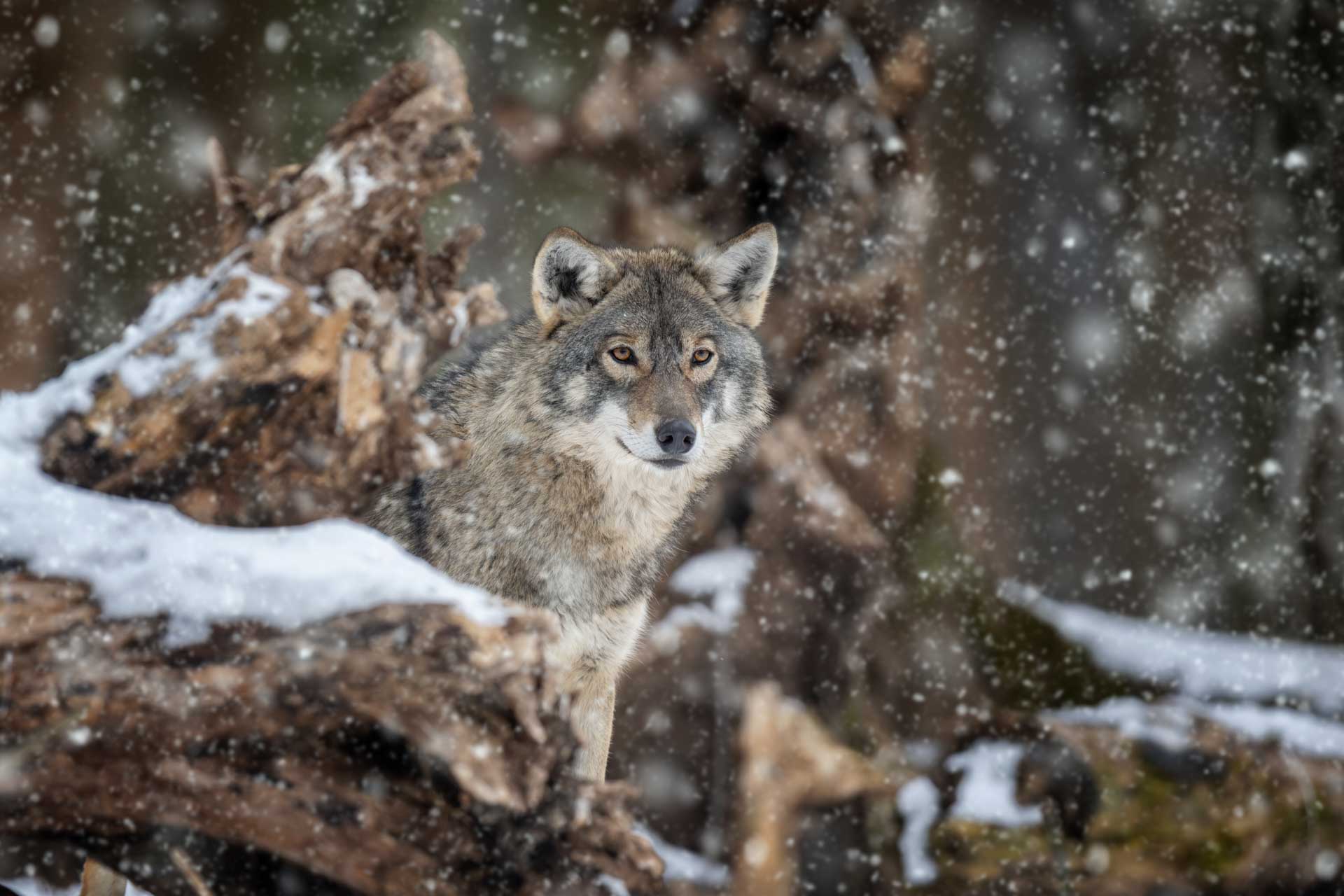
A gray wolf has entered Los Angeles County for the first time in more than 100 years, marking a historic moment in the species’ gradual return to California.
The three-year-old female wolf, known as BEY03F, crossed into northwestern Los Angeles County near Neenach around 6 a.m. on February 7, according to the California Department of Fish and Wildlife (CDFW).
“This is the most southern verified record of a gray wolf in modern times,” Axel Hunnicutt, CDFW’s gray wolf coordinator, said.
Born in 2023 in Plumas County as part of the Beyem Seyo pack, BEY03F has traversed nearly the entire Sierra Nevada mountain range during her dispersal. Wildlife officials believe she is likely searching for a mate and suitable habitat.
CDFW has been able to track her movements because she was fitted with a GPS collar in May 2025 while passing through Tulare County. Officials say they have not received any confirmed public sightings from Los Angeles County.
By Tuesday, BEY03F had begun traveling north again, possibly deterred by Interstate 5. Vehicle strikes are the leading known cause of mortality for wolves in California.
“It’s possible she may continue to travel hundreds of miles in search of a mate or she may come across a male tomorrow,” Hunnicutt said.
Gray wolves once roamed widely across what is now the continental United States. An estimated hundreds of thousands lived across North America before widespread hunting, trapping, and habitat loss drove them from much of their historic range. California’s last confirmed wild wolf was killed in 1924.
Protections under the Endangered Species Act in 1973, followed by reintroduction efforts in Yellowstone National Park and central Idaho in the 1990s, helped jumpstart the species’ recovery. Wolves gradually dispersed from those populations, with the first confirmed wolf crossing into California in 2011.
By 2024, CDFW estimated at least 70 gray wolves in the state, up from 44 the previous year. Nine confirmed packs now exist in California, primarily in the northern part of the state.
“The wolves in California are descendants of those reintroduced animals,” Hunnicutt said. “They made their way here because of wolves doing what BEY03F is doing now—being an explorer.”
Although conservation groups have hailed the wolf’s arrival in Los Angeles County as a milestone for wildlife recovery, the species’ return has also sparked tension in rural areas. According to CDFW, wolves killed 198 livestock animals in California last year. One pack was responsible for 90 of those deaths, and four wolves from that group were later euthanized.
Advocates are also pushing for stronger national protections. On February 10, the Center for Biological Diversity filed a lawsuit challenging the federal government’s decision not to develop a new national gray wolf recovery plan.
For now, BEY03F continues her journey. Whether she ultimately returns north along the Sierra Nevada or establishes territory farther south remains uncertain. But her brief appearance in Los Angeles County underscores a significant shift: after more than a century of absence, gray wolves are once again testing the edges of Southern California’s wild landscapes.