LA’s History-Making Wolf Is Now Roaming the Eastern Sierra

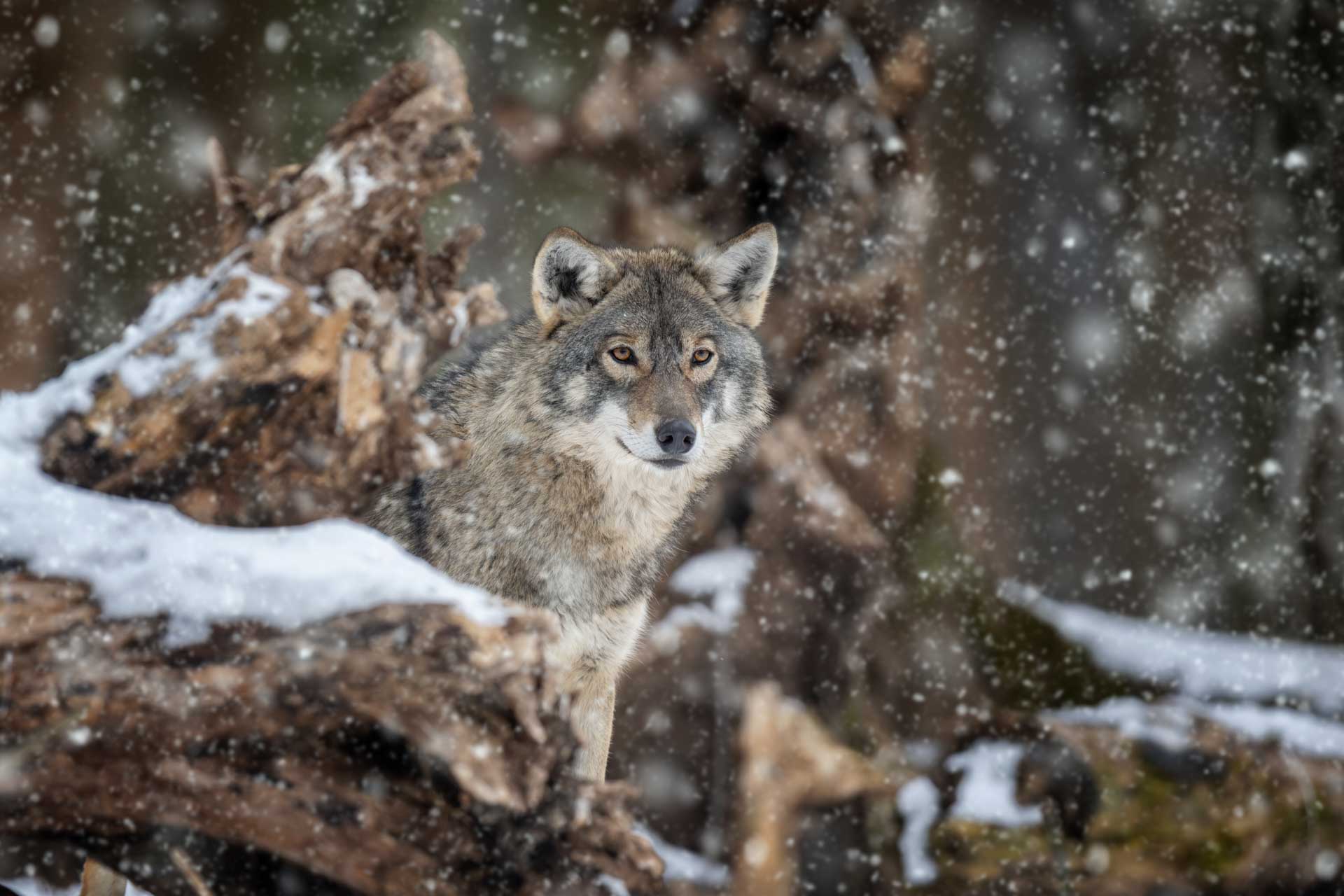
Wolf BEY03F has been making history at a steady clip. In February she turned up in the mountains northwest of Lancaster, the first documented wolf in Los Angeles County in at least a century.
On April 6 she entered Inyo County near a point about 20 miles south of Mt. Whitney, making her the first confirmed wolf in the Eastern Sierra in living memory. By the following morning she had pushed west of the small community of Bartlett and kept moving.
BEY03F is three years old, born in 2023 into the Beyem Seyo pack in Plumas County in the northern Sierra. She’s a disperser — a wolf that has left her birth pack to find territory and a mate, which is standard behavior for young wolves and the mechanism by which the species expands its range. She’s been collared and tracked by the California Department of Fish and Wildlife the whole way.
The total distance she’s covered since leaving Plumas County now exceeds 1,000 miles, across major freeways, through the Tehachapis, into the San Gabriels, and now down the spine of the Sierra and out onto the eastern escarpment.
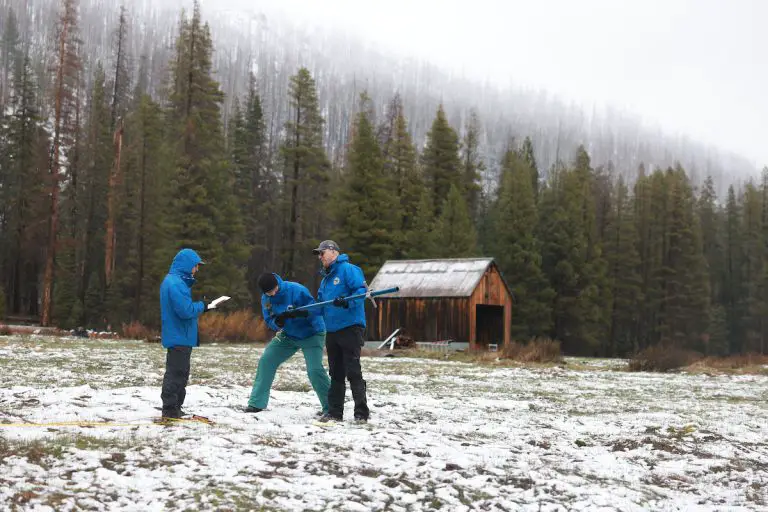
Her rapid movement through the Sierra this spring was likely helped by the same conditions making water managers nervous: the historically low snowpack left mountain passes more accessible than they would be in a normal April. What’s bad for California’s water supply apparently opened a corridor for a wolf on the move.
California’s overall wolf population has been growing steadily, reaching an estimated 50 to 60 animals statewide with three new packs documented in 2025. The recovery is real, but it’s not without friction. Last fall, four members of BEY03F’s birth pack were lethally removed by CDFW after repeated livestock kills in Sierra Valley — a reminder that wolf recovery in a working landscape involves trade-offs that conservation talking points tend to gloss over.
Where BEY03F goes next is unknown. Shefd’s in some of the best wolf habitat in the state — Inyo County encompasses Death Valley to the south and the White Mountains to the north, with millions of acres of remote public land in between. Whether she finds a mate and establishes a pack or keeps ranging is the question wildlife managers and trackers are watching closely.