Quagga and Zebra Mussels Are Quietly Wrecking SoCal Waterways

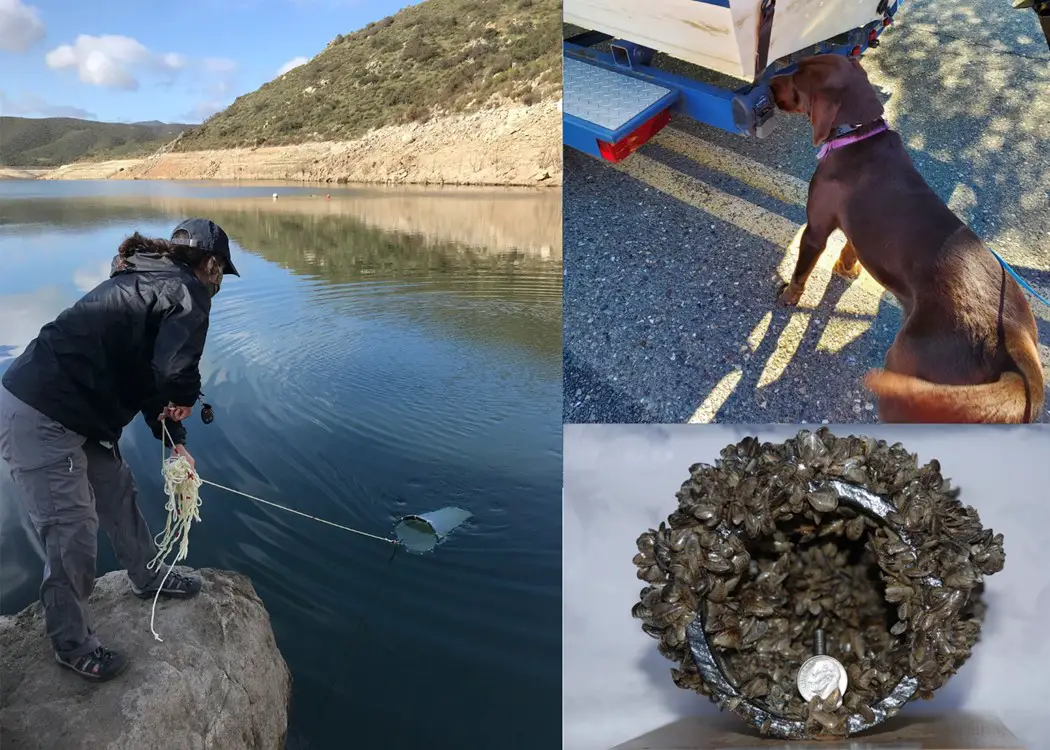
California State Parks’ Division of Boating and Waterways announced this week that grant funding is available for agencies working to prevent the spread of quagga and zebra mussels, timely reminder that these invasive mollusks remain one of the most serious ecological threats to Southern California’s lakes and reservoirs.
If you launch a boat, paddle a kayak, or fish anywhere from Lake Perris to Castaic Lake, this problem is already affecting your recreation, whether you realize it or not.
Quagga and zebra mussels are small freshwater bivalves, most no bigger than a fingernail, that reproduce at staggering rates and attach themselves to virtually any hard surface. Boat hulls, engines, trailers, dock infrastructure, water intake pipes – nothing is off-limits. A single female can produce up to a million larvae per year, and once a water body is infested, eradication is essentially impossible with current technology.
Southern California has been dealing with quagga mussels since they were first detected in Lake Mead in 2007. From there, they spread to several SoCal reservoirs, including Lake Havasu, San Vicente Reservoir, and Diamond Valley Lake. The San Diego County Water Authority and the Metropolitan Water District have spent millions on monitoring and infrastructure protection. The mussels clog water delivery systems, degrade water quality, and outcompete native species for food, disrupting ecosystems from the bottom of the food chain up.
For anglers, the downstream effects are real. Mussels filter massive volumes of water, stripping out the phytoplankton that sustains the aquatic food web. Fisheries in infested lakes can decline as forage species lose their nutritional base. For boaters, mandatory inspection and decontamination programs at many SoCal launch ramps add time and hassle to every trip, but those programs exist because a single contaminated vessel can introduce mussels to a clean lake.
The new grant funding from DBW targets exactly those prevention programs. Local agencies, water districts, and reservoir operators can apply for money to support watercraft inspection stations, public education, early detection monitoring, and rapid response planning. The grants are funded through vessel registration fees, meaning boaters themselves are already paying into the system.
What recreational users should do is straightforward and non-negotiable: clean, drain, and dry your watercraft and gear every single time you leave a water body. Every time. That means pulling drain plugs during transport, drying anchors and lines completely, and never moving standing water between lakes. Mussel larvae are microscopic and can survive in residual water for days.
Many SoCal reservoirs now require proof of inspection or a waiting period before launch. If you’re headed to a lake you haven’t visited recently, check with the managing agency before showing up with your boat on the trailer. Requirements vary by facility and can change seasonally.
The grant application details are available through the Division of Boating and Waterways website. But the real ask here isn’t for agencies — it’s for every person who puts a hull or a pair of waders in the water. Invasive mussels spread because people skip the basics. Don’t be that person.
Source: California State Parks