
Total Lunar Eclipse Will Turn the Moon Red Over Southern California

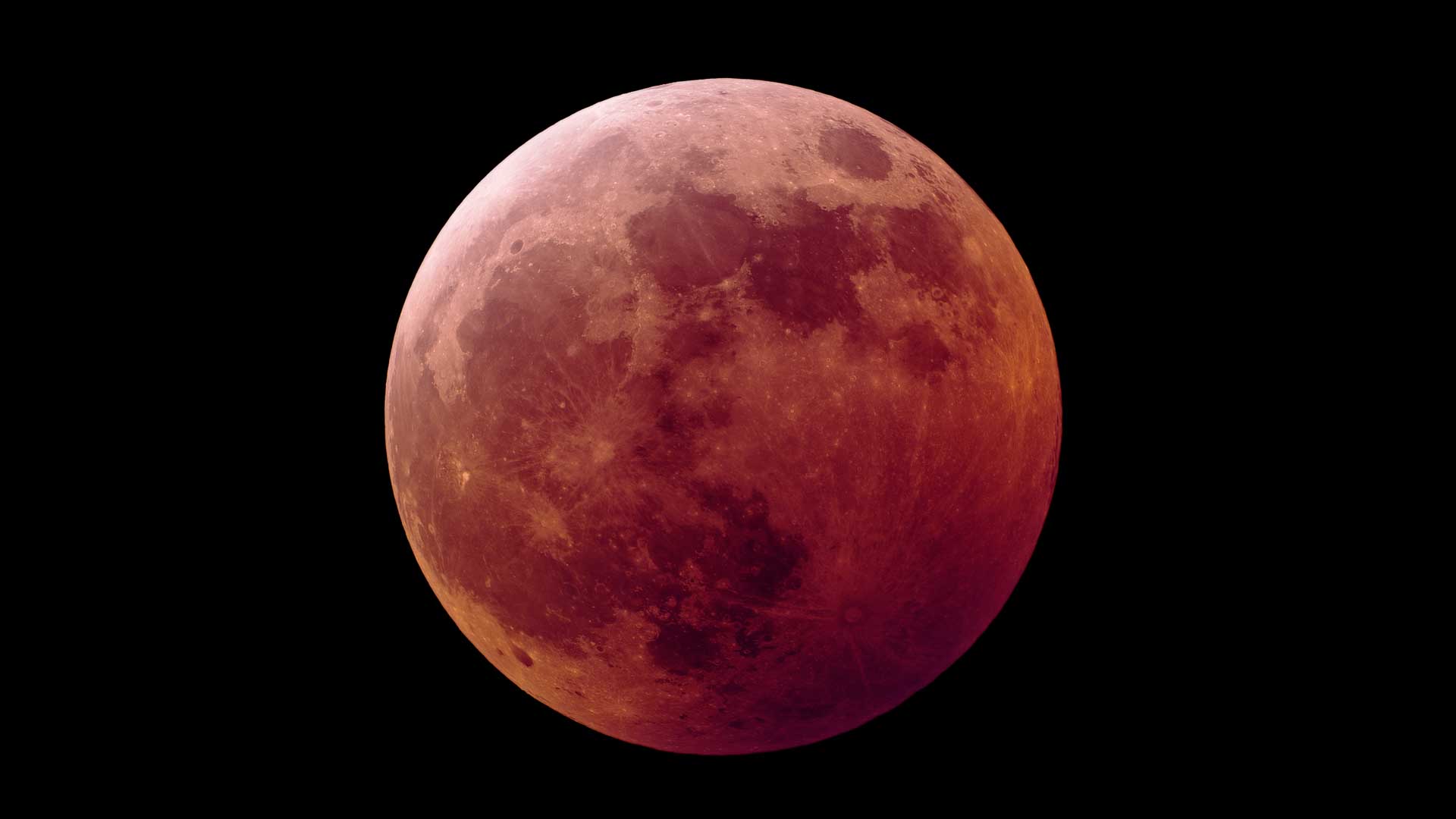
Early risers across Southern California will have a chance to see the moon turn a deep reddish-orange during a total lunar eclipse early Tuesday morning.
The eclipse will unfold between 12:37 a.m. and 6:25 a.m. PST, with totality — when Earth completely covers the moon — peaking at 3:04 a.m. During that window, the moon will take on the coppery glow often referred to as a “blood moon.”
According to NASA, a lunar eclipse occurs when Earth passes directly between the sun and the moon, casting a vast shadow across the lunar surface. The red color appears because while Earth blocks most direct sunlight, some light bends through our planet’s atmosphere and filters onto the moon. Shorter blue wavelengths scatter, leaving longer red and orange wavelengths to dominate — the same effect that gives us vivid sunrises and sunsets.
Unlike a solar eclipse, no special equipment is required to watch. If skies are clear, the eclipse will be visible from anywhere in Southern California simply by looking up toward the southwest. Binoculars or a telescope can enhance the view, and darker locations away from city lights will make the moon’s shifting color more vivid.
As Earth’s shadow dims the lunar surface, nearby stars and constellations may become easier to see than they typically are during a full moon. During the eclipse, the moon will sit in the constellation Leo, beneath the lion’s hind paws.
For those who prefer to watch from indoors, Griffith Observatory will host a livestream of the eclipse from 12:37 a.m. to 6:25 a.m., weather permitting. The observatory emphasized that it will be closed during the event and will not offer onsite public viewing.
Clear skies could make for a striking late-night or pre-dawn spectacle — and a reminder that even familiar desert and coastal landscapes can feel a little wilder under a red moon.