SoCal Rattlesnake Season Is…Not Normal

The normal arc of rattlesnake season in Southern California goes something like this: a few scattered early sightings in March, things picking up through April, peak activity from May through September, a gradual wind-down in October. That arc assumes a normal spring. This is not a normal spring.
The March heat that erased the Sierra snowpack also pulled rattlesnakes out of brumation — the low-metabolic winter dormancy that is not quite hibernation — weeks ahead of their usual schedule. Warm temperatures trigger two things simultaneously: snakes come out to forage, and they come out looking for mates.
Both drives push them into more territory, more often, at hours when hikers are also on trail. California Poison Control logged 77 bite calls in the first three months of 2026. The annual average for the entire year runs between 200 and 300.
Two people in Southern California died from bites in March. A 46-year-old woman from Ventura County was bitten on a trail at Wildwood Regional Park in Thousand Oaks and died five days later. A 25-year-old man in Orange County lost his balance on a mountain bike trail in Irvine, fell into brush, and was bitten.
The US Forest Service issued a formal safety warning. A Cal Poly SLO herpetologist who operates a snake relocation service on the Central Coast told the LA Times her call volume in March was ten to twenty times what she normally sees that time of year.
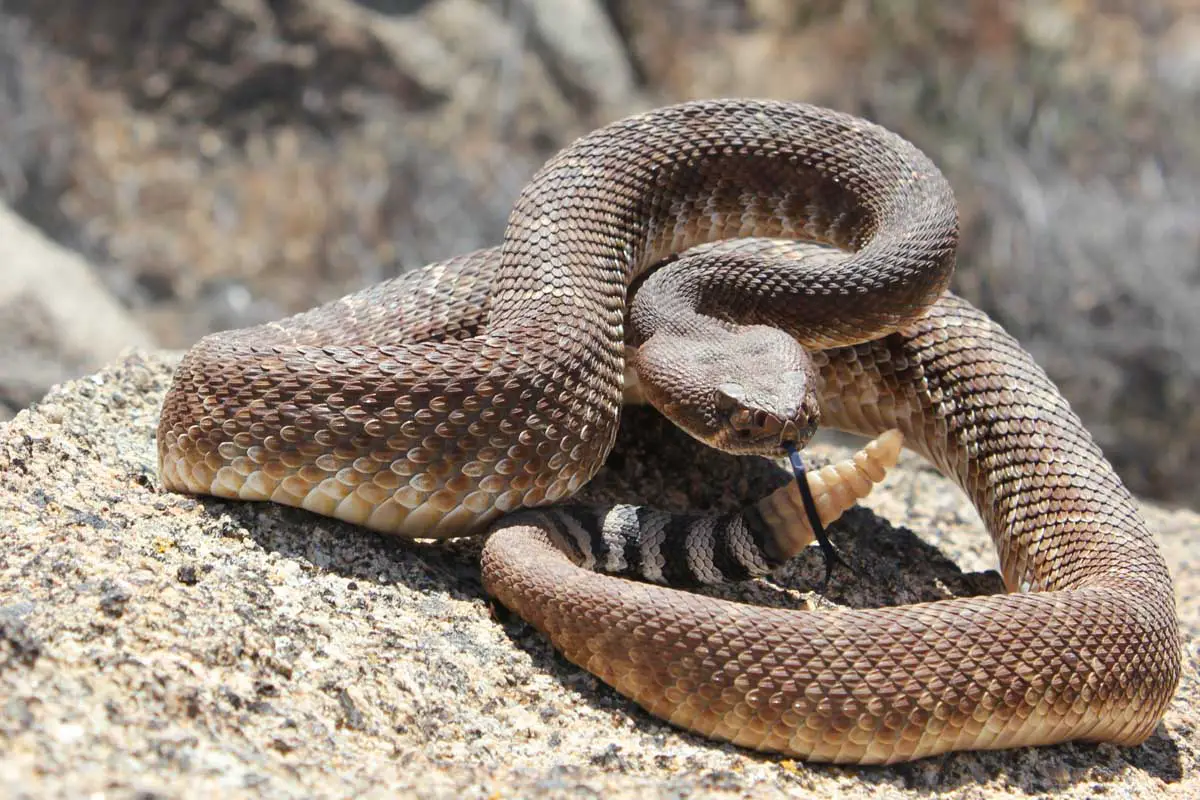
The relevant snake for most of the SoCal backcountry is the Southern Pacific rattlesnake, Crotalus helleri — a heavy-bodied pit viper that lives in the chaparral, rocky hillsides, and canyon brush of LA, Orange, Riverside, San Bernardino, Ventura, and San Diego counties.
It is not aggressive in any meaningful sense, but it does not give much warning when startled. Most bites happen at the edge of trails where people step into brush, reach into gaps in rocks without looking, or sit down without checking first.
The practical adjustments are not complicated: walk the middle of the trail, look before you sit, look before you step over anything. Keep dogs leashed. Carry a phone. If you’re bitten, don’t cut it, don’t suck it, don’t apply a tourniquet — keep the bite below your heart and get to an emergency room. Peak season is just getting started.