Antelope Valley California Poppy Reserve State Natural Reserve: Hiking and Wildflower Viewing

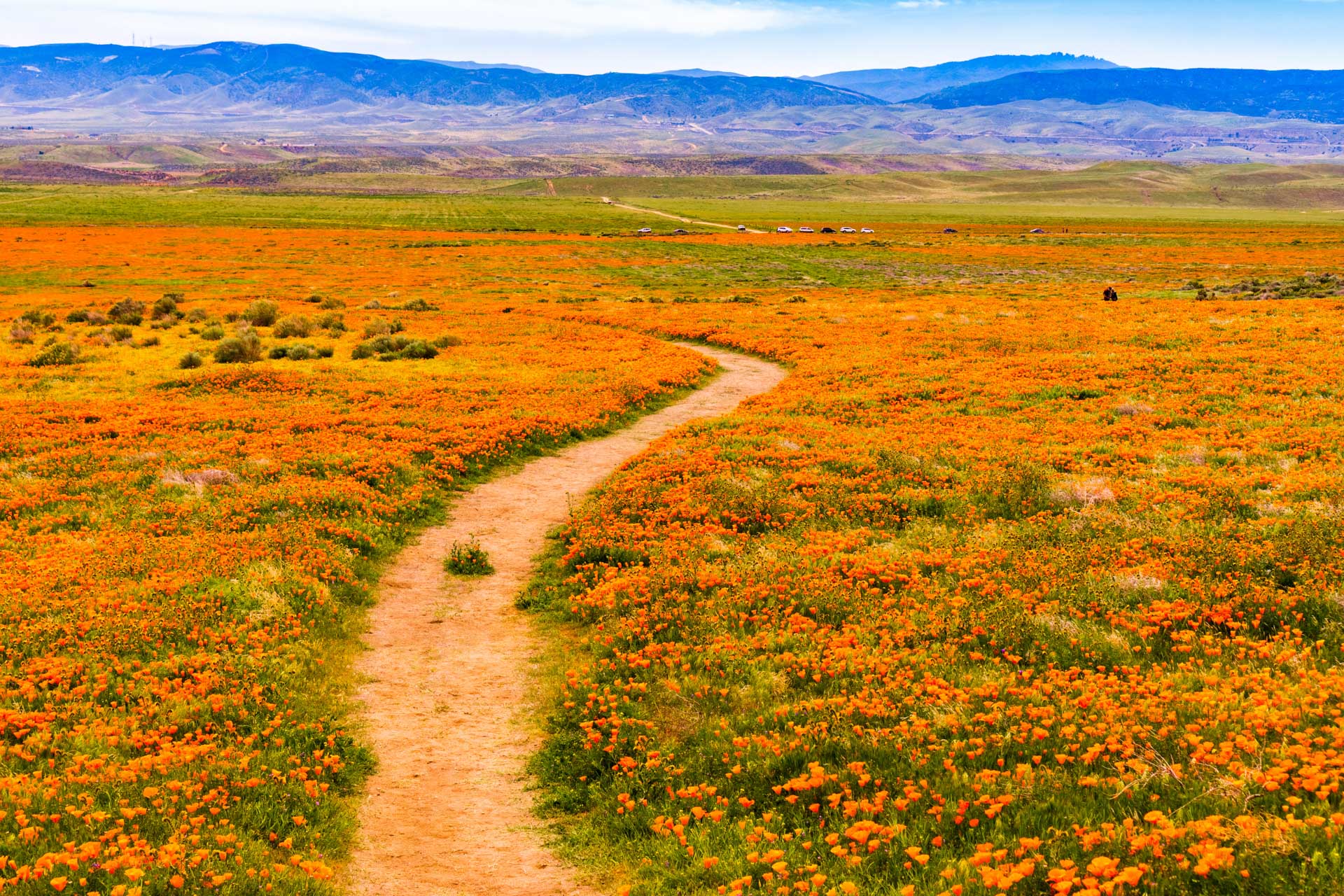
Each spring, the high desert west of Lancaster transforms into one of California’s most iconic wildflower displays. At Antelope Valley California Poppy Reserve State Natural Reserve, rolling Mojave Desert grasslands glow orange with California poppies, joined by a shifting mosaic of lupine, owl’s clover, goldfields, cream cups, and coreopsis.
The bloom typically runs from mid-February through May, though timing and intensity vary dramatically year to year depending on rainfall, wind, and temperature. When conditions align, the hills appear painted in sweeping bands of color, framed by broad views of the San Gabriel Mountains.
Destination Details
| Season | Year-round; peak wildflower season typically February–May |
| Location | Western Mojave Desert, 15 miles west of Lancaster |
| General GPS Coordinates | 34.732403, -118.395208 |
| Elevation | 2,600–3,000 feet |
| Management | California State Parks |
| Trail System | ~8 miles of trails, including paved ADA-accessible section |
| Nearest Major City | Lancaster |
| Address | 150th St W, Lancaster, CA 93536 |
Getting There
From Highway 14:
Take the Avenue I exit and head west 15 miles. Avenue I becomes Lancaster Road.
From I-5:
Take Highway 138 east, turn right on 170th Street West, then left onto Lancaster Road and continue two miles.
The reserve sits in open high-desert terrain with wide views and limited shade. Plan accordingly.
Hiking at the Poppy Reserve
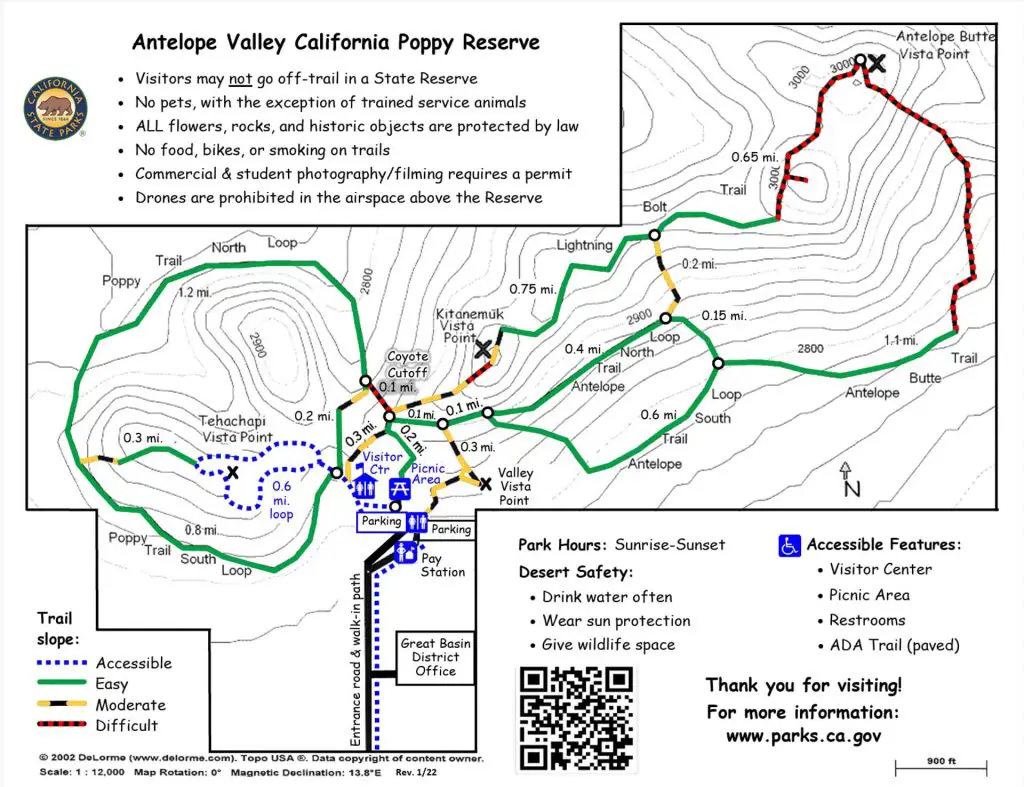
The reserve features approximately eight miles of interconnected trails that wind through gentle, rolling hills. A paved section near the entrance provides wheelchair access and an easy option for families.
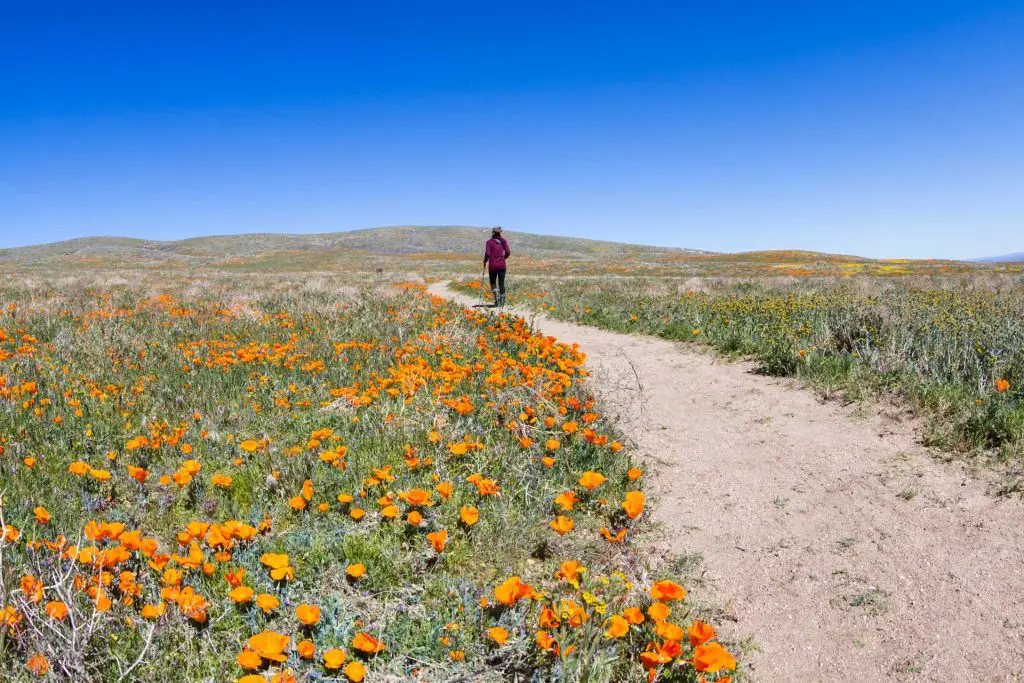
Trails are generally well-marked and range from short interpretive loops to longer routes that climb low ridgelines for panoramic views. Benches positioned along the paths provide quiet vantage points to watch hawks glide overhead or listen for meadowlarks in the grasslands.
The landscape here remains largely undeveloped and intentionally unaltered. California State Parks does not irrigate or enhance the bloom. The flowers respond solely to natural rainfall and desert conditions.