Scotty’s Castle: A Guide to Death Valley’s Historic Desert Mansion

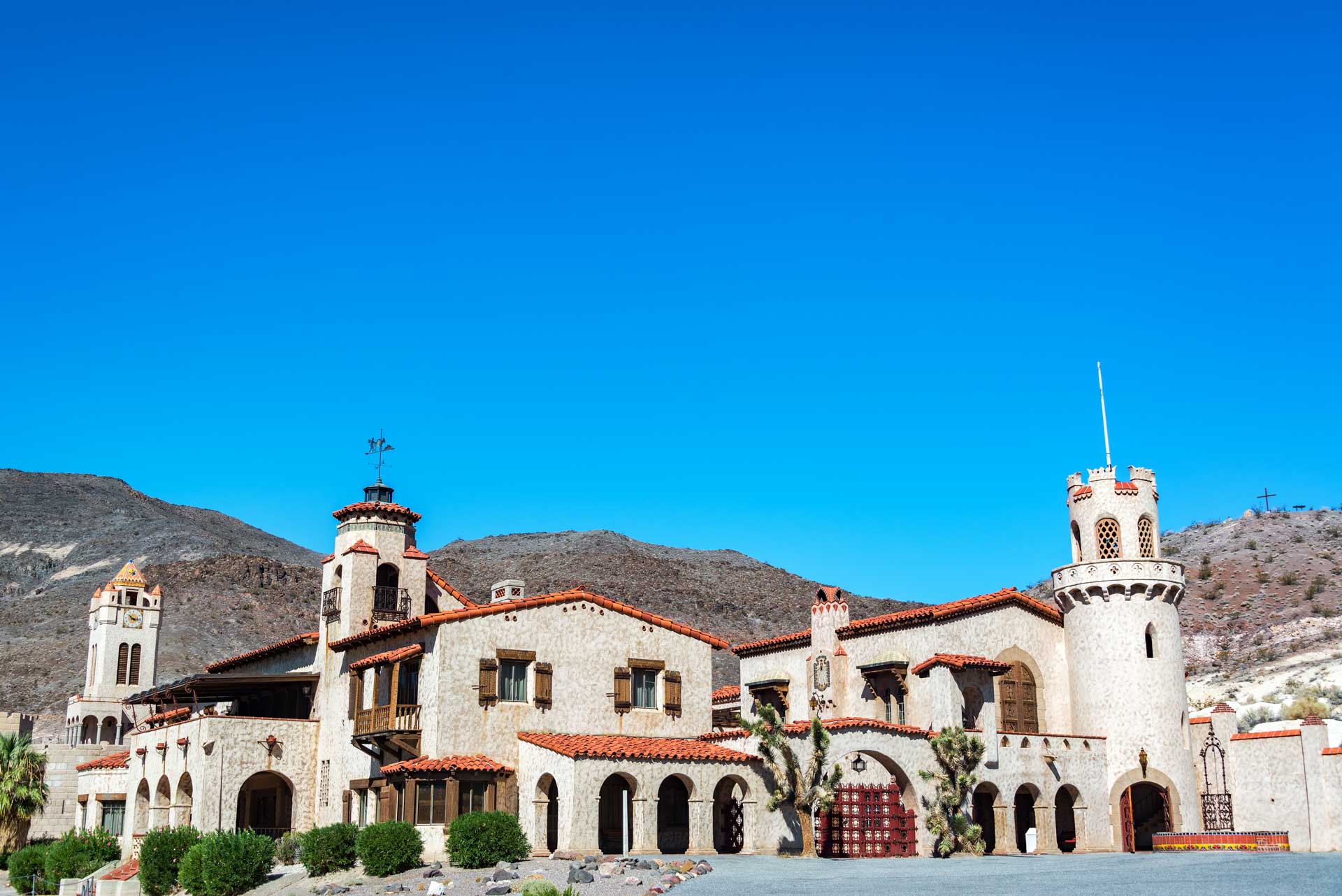
Scotty’s Castle is a Spanish Colonial Revival–style mansion tucked into the remote Grapevine Mountains in the northern reaches of Death Valley National Park. Built in the 1920s by Chicago businessman Albert Johnson and made famous by the flamboyant con man Walter “Death Valley Scotty” Scott, the estate blends desert legend with architectural ambition.
Severely damaged by flash flooding in 2015, the castle underwent a long-term restoration. It reopened for tours in early 2026.
Destination Details
| Location | Northern Death Valley, Grapevine Mountains |
| Park | Death Valley National Park |
| Elevation | ~3,000 feet |
| Built | 1922–1931 |
| Architectural Style | Spanish Colonial Revival |
| Access | Ranger-led tours offered |
| Nearest Services | Furnace Creek (far), Beatty, NV |
How to Get There
Scotty’s Castle is located in the far northern section of Death Valley National Park, near the Nevada border. From Furnace Creek, the drive typically takes about 1.5–2 hours via CA-190 and Scotty’s Castle Road. From Beatty, Nevada, it’s a shorter approach.
This remains one of the more remote corners of the park. Fuel up before heading north, bring water, and check seasonal road conditions, especially after storms.
Destination Overview
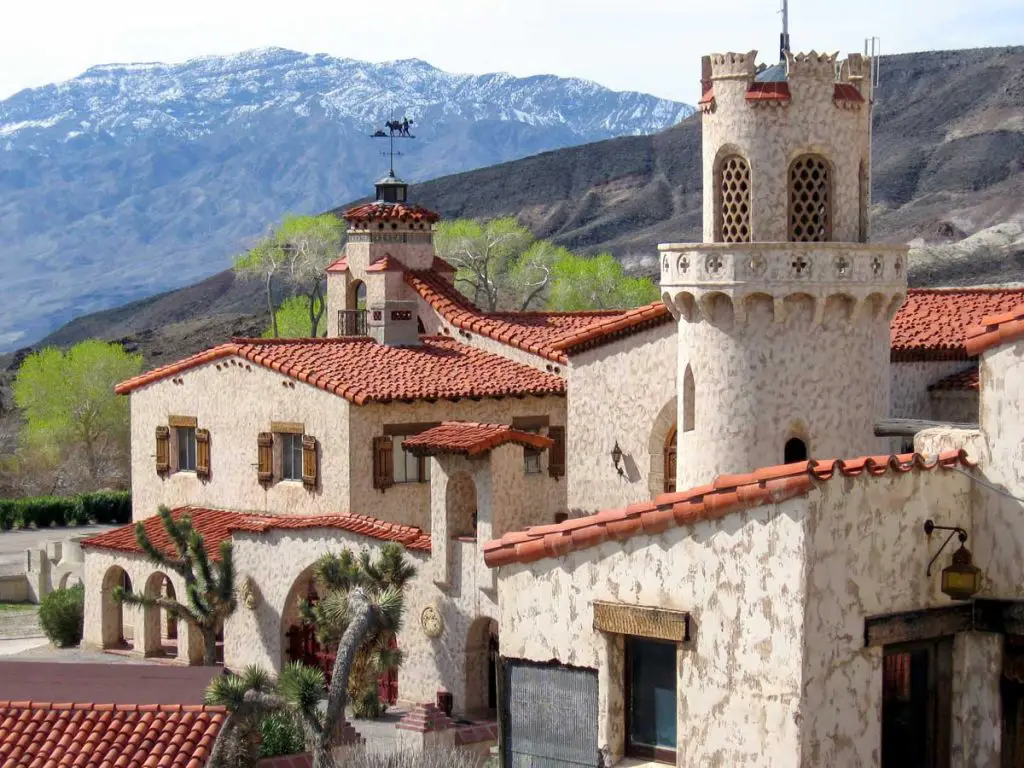
Scotty’s Castle rises unexpectedly from a green oasis of cottonwoods and date palms in Grapevine Canyon. Its red tile roofs, ornate ironwork, and tiled courtyard feel more Southern California estate than remote desert outpost.
Albert Johnson began construction in 1922 after being drawn to the region by Walter Scott, who claimed to own a lucrative gold mine nearby. While Scott cultivated the legend, Johnson quietly financed and built the estate as a winter retreat.
The property included modern luxuries for its time: a private hydroelectric system, imported tiles and custom furnishings, and a gravity-fed water system sourced from desert springs.
Restoration After the 2015 Flood

In October 2015, a powerful flash flood tore through Grapevine Canyon, severely damaging roads, utilities, and the castle’s infrastructure. The National Park Service undertook an extensive multi-year restoration project to rebuild roads, stabilize flood protections, restore historic interiors, and modernize utilities—all while preserving the building’s original character.
With renovations now complete, visitors can once again step inside and experience the craftsmanship and eccentric history of the estate through guided tours.
What You’ll Experience
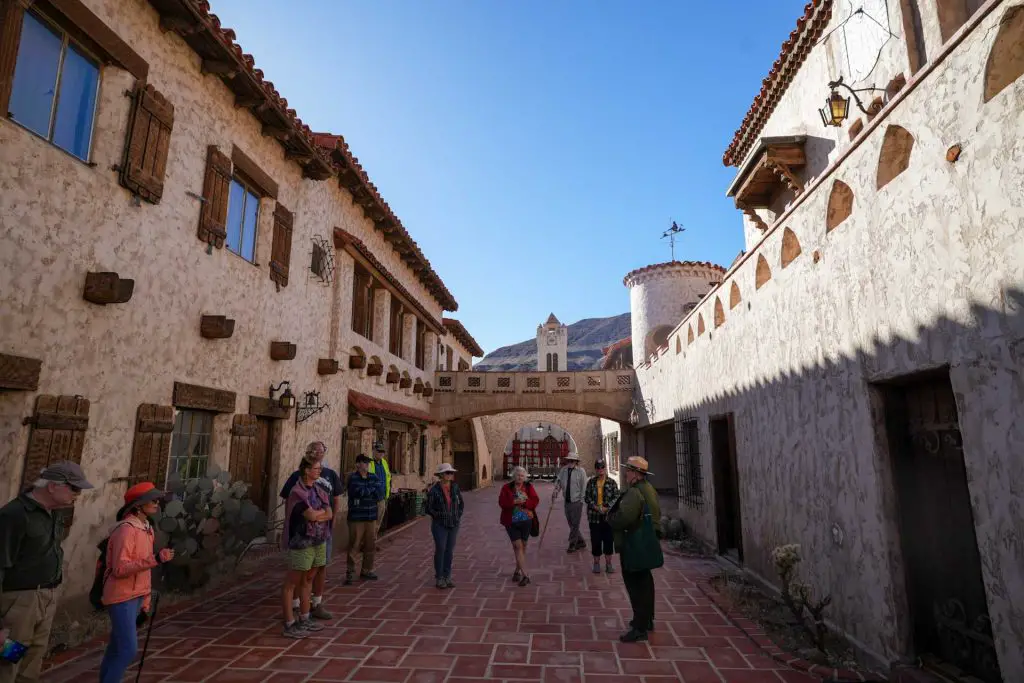
Ranger-led tours provide access to the mansion’s restored rooms, including living quarters, mechanical systems, and architectural details that showcase early 20th-century engineering in a remote desert environment. Interpretive programs explore both the colorful mythology surrounding “Death Valley Scotty” and the reality of Johnson’s role in building the estate.
Outside, the surrounding Grapevine Mountains create a dramatic backdrop. The contrast between lush landscaping and stark desert terrain remains one of the most striking aspects of the site.
Nearby Highlights
If you’re exploring northern Death Valley, consider pairing Scotty’s Castle with:
- Ubehebe Crater
- Mesquite Flat Sand Dunes
- Titus Canyon (when open)
- Rhyolite Ghost Town near Beatty, Nevada
Things to Know Before You Go
- Tour reservations may be required. Check the National Park Service website for schedules and availability.
- Fuel and services are limited. Plan ahead.
- Cell service is unreliable. Download maps in advance.
- Summer temperatures can be extreme. Fall through spring offers more comfortable conditions.
Why Visit Scotty’s Castle?
Scotty’s Castle is part architectural curiosity, part desert legend. In a park defined by geological extremes, this restored mansion stands as a testament to ambition, storytelling, and the enduring appeal of Death Valley’s remote landscapes.