Outdoor Recreation Groups Push Back on a Federal Clean Water Rollback

A coalition of outdoor recreation organizations is calling on the public to oppose a series of federal policy changes that would strip protections from millions of acres of wetlands and hundreds of thousands of miles of streams across the country — waterways that paddlers, surfers, anglers, and hikers depend on every time they head outside.
The campaign, led by the Outdoor Alliance and its partners including American Whitewater, the Surfrider Foundation, the Winter Wildlands Alliance, and the American Canoe Association, targets three overlapping threats: a proposed rewrite of the Clean Water Act’s definition of protected waters, a push to expand offshore oil and gas drilling along the California coast, and a failure to reauthorize federal beach water quality monitoring funding.
For the outdoor community, the current collective ask is clear: submit public comments, contact your representatives, and make noise. The Outdoor Alliance’s Speak Up for Clean Water campaign page links to specific action items for each of the threats described above, organized by partner organization.
The centerpiece of the fight is a proposed rule from the EPA and the U.S. Army Corps of Engineers, published in November 2025, that would dramatically narrow which rivers, streams, and wetlands fall under federal protection.
Known as the Waters of the United States rule, or WOTUS, it has been one of the most contested definitions in environmental law for decades. The current push builds on a 2023 U.S. Supreme Court decision, Sackett v. EPA, which had already significantly narrowed which wetlands qualify for federal protection by requiring a continuous surface connection to larger waterways — eliminating an older “significant nexus” test that had covered a much broader range of water bodies.
The new proposed rule goes further still, adding a “relatively permanent” flow requirement that would exclude waters that don’t run year-round or at least through a defined wet season. That standard would effectively strip protection from seasonal streams, isolated wetlands, and headwaters — the kinds of water bodies that rarely make the news but quietly filter pollution, absorb floodwaters, and feed the rivers and beaches downstream where people actually recreate.
The “relatively permanent” standard at the center of both the Sackett ruling and the proposed WOTUS rule is a particular problem for Southern California. A January 2026 report from the California State Water Resources Control Board to the Legislature noted explicitly that the standard “removes non-perennial waters common in the arid west and dominant in large parts of Southern California from federal jurisdiction.”
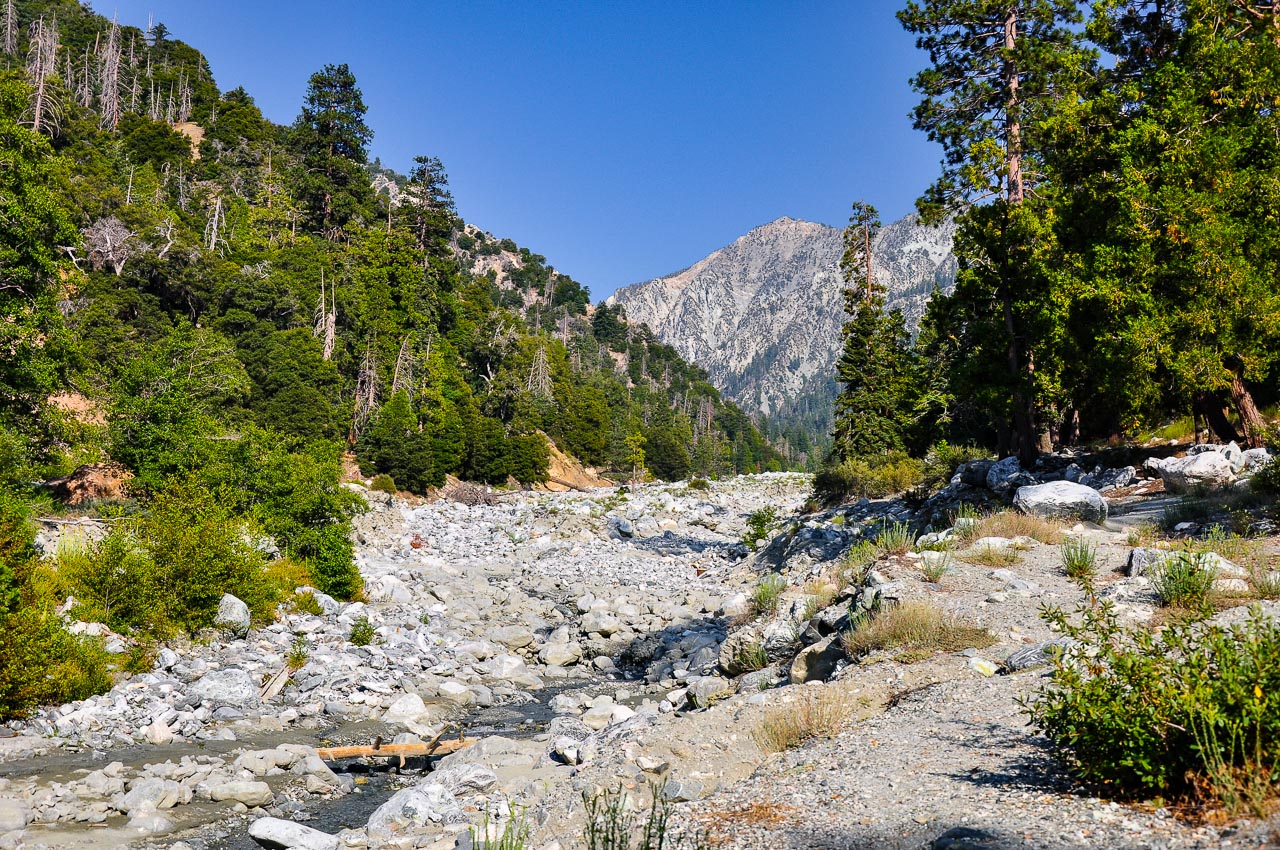
Many SoCal streambeds run dry for part of the year. Under the proposed rule, a seasonal creek in the San Gabriel Mountains or San Bernardino foothills, the kind that runs hard after a rain and drains toward the coast, could lose federal protection entirely, meaning a developer or industrial operator could fill or pollute it without triggering a federal permit.
California does have its own water protection law — the Porter-Cologne Act — and the Water Boards retain authority to regulate discharges to waters of the state regardless of federal jurisdiction. But the Water Board report makes clear that picking up federal slack is not seamless or free. Between 20 and 48 percent of permits that used to be processed as streamlined federal certifications now require state-issued Waste Discharge Requirements instead, a more time-consuming process that requires full Regional Water Board approval at a publicly noticed meeting rather than a staff-level sign-off. The Santa Ana Regional Water Board, which covers most of inland SoCal, was among the hardest hit — nearly all of its individual permits shifted to the heavier state process after Sackett. The state has already hired 26 additional staff to manage the increased workload and says more are needed.
The enforcement picture is worse. For discharges to waters that have lost federal jurisdiction, California’s maximum administrative penalty drops from $10,000 per day to $5,000 per day, with narrower triggering conditions. Critically, the state cannot take proactive enforcement action against permit violations until an actual discharge occurs, meaning regulators can’t stop harm before it happens, only respond afterward.
The Water Board report flags this gap directly, noting that the inability to enforce protective permit terms before they result in an actual discharge means that impacts “cannot be prevented by proactive enforcement of permit terms.” If the proposed 2025 WOTUS rule finalizes as written, the report anticipates all of these pressures will compound further, since the rule would narrow federal jurisdiction beyond what Sackett itself required.
An NRDC analysis found that between 38 million and 70 million acres of wetlands nationally are at risk under scenarios modeled on the proposed changes. The EPA’s own analysis projects that only 19 percent of the nation’s existing nontidal wetlands would retain federal protection if the rule is finalized as written. That figure, according to other independent analyses, could fall as low as zero percent depending on implementation.
The outdoor recreation community’s objection is less about regulatory philosophy and more about hydrology. Wetlands and small streams filter pollutants before they reach larger waterways. The Outdoor Alliance, in formal comments submitted to the EPA opposing the rule, argued that once those upstream buffers are gone, the costs fall on downstream communities — dirtier rivers, degraded beaches, closed swim zones — with damage that is often permanent. Paddlers, surfers, and swimmers are not casual observers of this problem; they are in the water, frequently during high-flow conditions when upstream pollution travels fastest.
The WOTUS fight is happening inside a broader pattern of federal water policy changes. The Trump administration has also proposed opening California, Florida, and Alaska coastal waters to offshore oil and gas drilling under a five-year Outer Continental Shelf leasing plan covering 2026 through 2031. That proposal would reverse a Biden administration withdrawal that had protected more than 625 million acres of U.S. coastal waters from new leasing. The Surfrider Foundation called the plan an “unprecedented and dangerous” threat to the coastal recreation and tourism economy, which it pegs at $250 billion annually and 3.3 million jobs.
Meanwhile, the EPA’s BEACH Act grant program, which funds the state-level water testing that tells beachgoers whether it’s safe to get in the water, faces proposed elimination in the administration’s FY2027 budget, a 52 percent overall cut to EPA funding that would zero out beach monitoring grants entirely. Environment America found that in 2025, more than 60 percent of U.S. coastal and Great Lakes beaches tested had at least one day of potentially unsafe bacteria contamination levels. The bipartisan American Water Stewardship Act, which would reauthorize the BEACH Act through 2031, passed the House in March 2026 by a vote of 378 to 32 and now awaits the Senate.
The PERMIT Act, which passed the House in December 2025, adds another layer. The legislation streamlines the permitting process under the Clean Water Act, reducing review timelines and litigation options for projects affecting wetlands, change outdoor and conservation groups say would limit the tools available to challenge harmful development.
Senator Adam Schiff, joined by 15 Senate Democrats, sent a letter to EPA Administrator Lee Zeldin and Army Corps leadership in January 2026 opposing the proposed WOTUS rule, arguing it ignores the science of how water moves through landscapes and passes the compliance burden to state governments and ultimately taxpayers.
The comment period on the WOTUS proposed rule closed January 5, 2026. The offshore drilling comment period ran through January 22. Both are now in the federal rulemaking process, where public comment volume is formally counted and where legal challenges from environmental groups are expected regardless of the final outcome.